


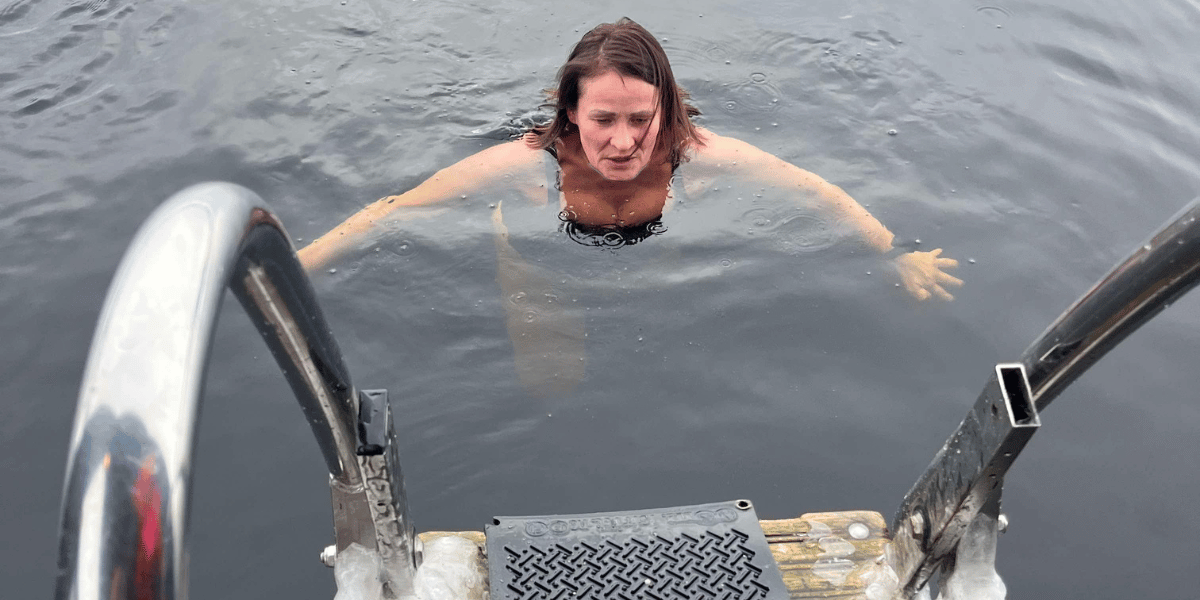
For many people with fibromyalgia, heat is the first thing they seek when the pain is at its worst. That’s why the idea of stepping into ice-cold water might seem completely out of the question. Yet more and more people are finding the opposite to be true: that cold can actually provide relief.
In an article in Fibromyalgia Magazine 1/2026, several people describe how ice bathing has had a positive effect on pain, stress, and mood.
But what is actually happening?
When the body “shifts gears”
When you step into cold water, the body reacts immediately. Breathing quickens, the heart rate increases, and the nervous system goes on high alert. But after a short time, something interesting happens: The body calms down.
Many describe how the cold water creates a sense of stillness in the body, as if pain signals are dampened for a while.
This may be related to:
- Reduced inflammatory response
- Increased release of endorphins
- Better regulation of the stress response
For people with fibromyalgia, where the nervous system is often overactive, this can be particularly relevant.
Pain relief, and a break from the body
One recurring experience is the feeling of “getting a break” from the pain.
Not necessarily because it disappears completely, but because the focus shifts. When you stand in cold water, you are present in the here and now. Thoughts, worries, and the experience of pain take up less space.
Many also experience:
- Less pain afterward
- Lower stress levels
- Better sleep
- An increased sense of mastery
Breathing is the key
The biggest challenge for many is not the cold, but breathing. When the body encounters cold water, it automatically takes quick breaths. This is completely normal. But this is also where you can make the biggest difference.
Focus on this:
- Breathe in calmly through your nose
- Exhale longer than you inhale
- Try to breathe deeply. Relax your stomach and try to fill the lower part of your lungs, not the top of your chest. The movement should come from your lower ribs and stomach.
- Find your rhythm before going deeper into the water
By calming your breathing, you also calm your nervous system. And suddenly, you go from “stress” to “control.”
Our partner, breathing coach Nina Melhus, recommends this breathing method to calm the nervous system.
Not about performance, but about listening
Ice bathing isn’t about being the toughest. Quite the opposite.
For people with fibromyalgia, it’s especially important not to push yourself too far. A few seconds can be more than enough. The effect lies not in how long you’re in the water, but in how your body experiences it.
The most important things are:
- To enter calmly
- To tune in to your body
- To stop before your body gets too stressed
Ice bathing isn’t for everyone. And it’s not a “quick fix.”
But for some, it can be a new tool in the toolbox, just like movement, rest, and mindfulness when it comes to creating balance in your own life. It’s important not to try ice bathing alone until you know your body well and understand how it reacts.
At Helfi, this is exactly what we focus on: Understanding what works for you.
By noting how activities like cold, heat, sleep, and movement affect your body, you can find your own balance over time.
Maybe it’s worth a try?
Maybe cold isn’t the enemy after all.
Maybe—in small doses—it can be a path to more calm, better coping, and a body that feels a little more in sync.


