


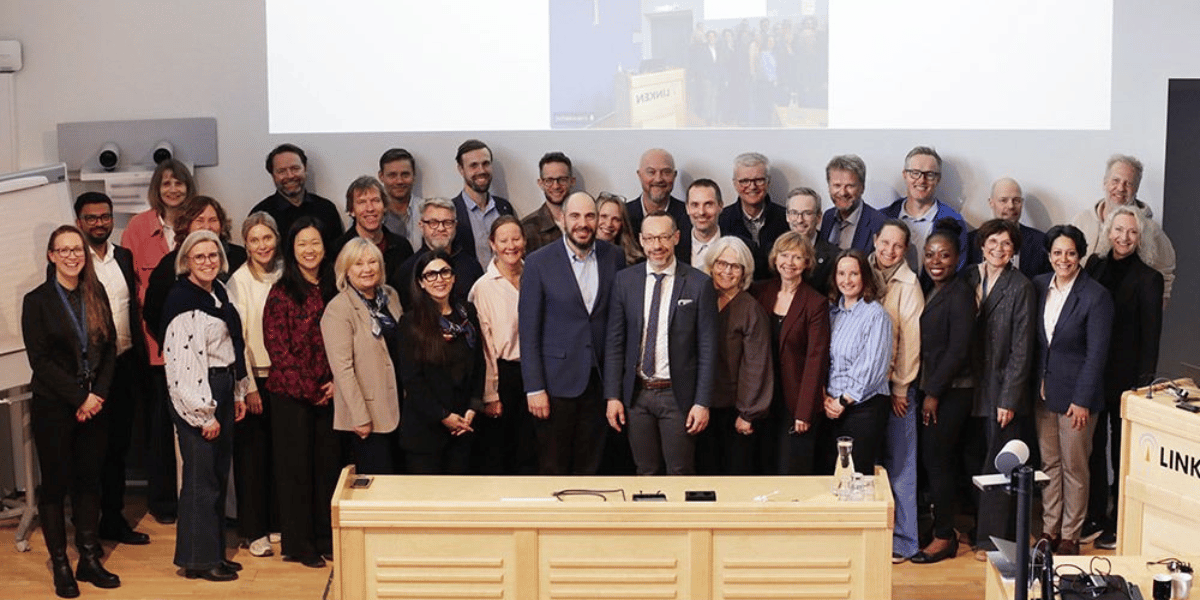
A Center for Research-based Innovation (SFI) is a national initiative in which research communities, the business sector, and the public sector collaborate over several years to develop new knowledge and solutions with real societal value. The goal is not just research, but research that is actually put to use.
Now a new SFI has been launched: DigiVita – Centre for Personalized Digital Health Promotion, led by the National Center for e-Health Research and SINTEF, and Helfi is on board.
96 million to rethink health
DigiVita has received 96 million kroner from the Research Council over eight years, and the ambition is clear: To develop digital solutions that help more people stay healthy longer—and live better lives, even with illness.
This is about an important shift. From treating illness to promoting health.
As Professor Paolo Zanaboni says:

“We cannot build a sustainable healthcare system by simply treating more people. We must help more people stay healthy, function better in their daily lives, and enjoy a better quality of life.”
Personal health – digitally
Through DigiVita, solutions will be developed that provide personalized health advice and insights, including via platforms such as HelseNorge.
Using artificial intelligence and big data, the goal is to find better answers to what actually works, and for whom.
The aim is to create tools that:
- make it easier to make good choices in daily life
- strengthen self-management
- provide more accurate follow-up
Why this is important for Helfi
This has been one of Helfi’s goals from day one: to provide data for research to find better answers. So at Helfi, we work on this every day.
How can we give people with chronic conditions a better overview of their daily lives?
How can we help achieve a balance between activity and rest?
And how can data from daily life be used to create better insights—both for the individual and for research?
Through participation in DigiVita, we have the opportunity to:
- contribute real-world user data from daily life
- test and further develop solutions together with leading research communities
- help bridge the gap between technology, research, and actual use

Together, we are building the healthcare system of the future
DigiVita brings together some of Norway’s strongest academic communities, including UiT, NTNU, the University of Agder, and Nord University, in close collaboration with the business community and the public sector.
This is exactly the kind of collaboration needed to succeed.
Because we know one thing:
The healthcare of the future isn’t created solely in hospitals. It’s created in everyday life. And it’s created best—together.
An invitation to contribute
Fibromyalgia remains one of the most complex and poorly understood diagnoses we have. Many people live with symptoms that can’t be measured by a blood test and are often difficult to explain.
This also means we lack data. And without data, we get fewer answers. That’s why this isn’t just about research and technology—it’s about people.
You, who live with this every day, possess knowledge that no research article alone can provide.
By using Helfi and recording how your daily life actually feels—pain, sleep, activity, energy—you’re helping to build a knowledge base that can help us understand more.
The data is used anonymously, but the insights can be crucial.
Together, we can contribute to more answers for a disease that has had far too few for far too long.


